Our Services
From laser scanning to final deliverables - everything you need for accurate as-built documentation.
What We Do
Each project starts with a 3D laser scan and ends with production-ready deliverables in the formats your team uses.
3D Laser Scanning
On-site capture using terrestrial laser scanners. Millions of measurement points per scan position, registered into a single coordinate system. Non-invasive and non-disruptive - we work around occupants, tenants, and active operations.
Registered Point Clouds
Multiple scan positions registered into a unified 3D coordinate system. Delivered in industry-standard formats for direct use in your design and analysis software. Point clouds serve as the foundation for all downstream deliverables.
As-Built BIM Models
Intelligent 3D models built from point cloud data. Walls, floors, ceilings, doors, windows, and MEP systems modelled to your Level of Detail (LOD) requirements. Used for renovation design, facility management, and construction coordination.
3D Models (SketchUp)
Lightweight 3D models for design exploration, massing studies, rendering, and stakeholder presentations. Built from verified scan data for dimensional accuracy without the complexity of a full BIM model.
As-Built CAD Drawings
Traditional 2D plan, section, and elevation drawings extracted from scan data. Dimensioned and annotated to professional drafting standards, ready for design and construction use.
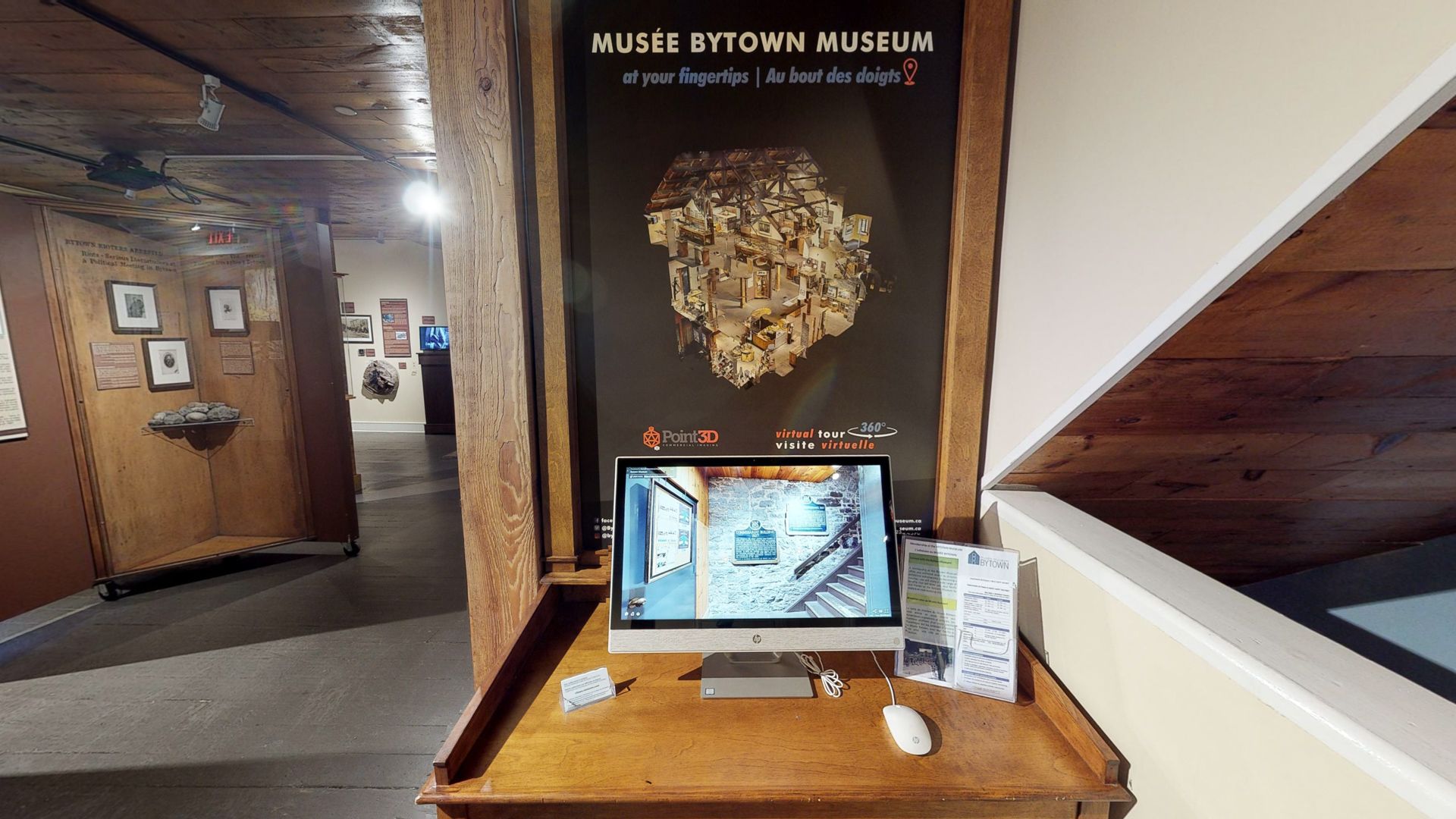
360 Walkthroughs
Interactive 3D representations of scanned spaces for remote review, stakeholder communication, and archival. Navigate the building from any device without needing design software.
Deliverable Formats & Specifications
Every deliverable is built from verified scan data. Here's exactly what you receive.
| Deliverable | Formats | Typical Use |
|---|---|---|
| Registered Point Cloud | .RCP, .E57, .PTX, .PTS, .LAS, .LGSX | Design reference, clash detection, spatial analysis |
| BIM Model (Revit) | .RVT | Renovation design, facility management, MEP coordination |
| 3D Model (SketchUp) | .SKP | Design exploration, massing, rendering |
| CAD Drawings | .DWG, .PDF | Construction documents, permit drawings, design base |
| Floor Plans | .PDF, .DWG | Space planning, lease exhibits, renovation layouts |
| Elevations | .PDF, .DWG | Facade studies, heritage documentation, section analysis |
| Reflected Ceiling Plans | .PDF, .DWG | Lighting layout, HVAC coordination, ceiling grid documentation |
| 360 Walkthrough | Web-based | Remote review, stakeholder communication, archival |
Quality & Verification
Every project follows the same quality assurance process - no shortcuts, no surprises.
Field Verification
Control measurements are taken on-site to validate scan registration. Known dimensions are recorded and compared against point cloud data.
Registration QA
Overlap analysis and error reporting on registered point clouds. Registration reports are included with every point cloud delivery.
Model Audit
Deliverables are checked against point cloud source data. Modelled elements are compared to scan geometry to confirm positional accuracy.
Dimensional Spot-Check
Critical dimensions are verified before release. An assumptions log documents any areas where conditions required interpretation.
Client Review Round
One revision round is included in standard scope. You review the deliverables, flag any concerns, and we address them before final release.
Frequently Asked Questions
How accurate is laser scanning?
Typical accuracy ranges from ~2 mm to ~20 mm, depending on the scanner used, environmental conditions (dust, humidity, vibration), and the complexity of the space. For most commercial interiors, you can expect accuracy in the 3 - 6 mm range. Specific accuracy requirements can be discussed during project scoping, and we'll confirm what's achievable for your site.
How long does a project take?
Scanning typically takes 1 - 3 days on-site depending on the size and complexity of the building. Processing and modelling takes 1 - 3 weeks depending on the deliverables requested. A small office floor plan might be delivered in under a week. A full BIM model of a large commercial building might take 3 - 4 weeks. We'll confirm timeline during scoping.
What areas of the building do you scan?
We scan all accessible areas. If a room, closet, or mechanical space is accessible on scan day, it gets captured. Areas that are locked, obstructed, or unsafe are documented in the assumptions log. We coordinate with your building manager to maximise access before we arrive.
Does the building need to be empty?
No. We work around occupants, tenants, and active operations. Furniture and equipment will appear in the point cloud, and we model the building structure behind them where possible. For best results in critical areas, we recommend clearing movable obstructions, but it's not required.
What file formats do you deliver?
Point clouds are delivered in .RCP, .E57, .PTX, or .LGSX formats. BIM models are delivered as Revit (.RVT) or ArchiCAD files. 3D models as SketchUp (.SKP). CAD drawings in AutoCAD (.DWG). Floor plans and elevations in .DWG and .PDF. We're flexible - if you need a format not listed here, let us know.
Do you travel outside Ottawa and Toronto?
Yes. We serve clients across Canada, with regular projects in Montreal, Vancouver, Calgary, Edmonton, Winnipeg, London (ON), and Kingston. For locations outside our core markets, we either travel directly or coordinate with local partners - depending on what makes the most sense for your project and budget. Travel costs are quoted transparently.
What is a point cloud?
A point cloud is a set of millions of data points in 3D space, each with an X, Y, and Z coordinate. Together, these points create a precise digital replica of the scanned environment. Point clouds can be viewed, measured, and used as the basis for BIM models, CAD drawings, and floor plans. Think of it as a detailed, measurable 3D photograph of your building.
How do I know which deliverables I need?
It depends on what you're doing with the information. If you're designing a renovation in Revit, you need a BIM model. If you need dimensions for a lease exhibit, floor plans are sufficient. If your engineers want to work directly with raw data, a point cloud is the right starting point. We help you determine the right scope during our initial consultation - no charge for that conversation.